Plan Your Day Around One Big Thing to Feel Less Stressed
Here’s a trick that works way better. Instead of planning your whole day around a huge list, plan it around just one big thing.
Here’s how it works. Every morning, before you even open your phone or start your coffee, you ask yourself one question: “What is the one task that, if I get it done today, I’ll feel like this day was a win?“ That’s it. Not three tasks. Not five. Just one. It could be making that doctor’s appointment you’ve been avoiding. It could be finishing the outline for a work project. It could be cleaning out the fridge. Or sitting down to write a thank-you note to a friend. The size doesn’t matter. What matters is that it’s the thing that’s taking up the most mental space.
Once you pick that one big thing, you put it first in your day. You don’t do it after lunch. You don’t do it when you “find time.“ You do it early, before the anxiety has a chance to build up. Maybe you need to do it before you check your email. Maybe you need to do it right after breakfast. But you schedule it like a non-negotiable. And here’s the magic: after you finish that one thing, the rest of the day can be a total mess and you still won’t feel that heavy wave of panic. Because you already did the thing that was weighing on you.
Why does this work so well for anxious feelings? Because anxiety loves a foggy brain. When you have forty tasks floating around in your head, your brain thinks you’re in danger. It goes into that stress mode. But when you pick one clear task and write it down, you’re telling your brain, “Hey, I got this. Here’s the plan.“ That simple act of choosing one thing shrinks the fog down to a manageable size. You go from trying to hold forty tennis balls in your hands to holding just one. The other thirty-nine are on the floor, and that’s okay. They’ll get picked up later.
Now, I’m not saying you should ignore everything else. Life has small stuff that has to happen. You still need to eat, maybe take a shower, call your mom back. So here’s the second half of this routine. After your one big thing is done, you make a tiny list of the small stuff. But you don’t write down ten things. You write down three at the most. That’s it. The rest goes on a backup list that you can look at tomorrow. Why only three? Because when you finish your one big thing and can check off three small things, you feel like a champion. That “done” feeling fights anxiety better than any pep talk.
The biggest mistake people make with routines is they try to plan every single minute. They make schedules that look like a maze. That might work for some folks, but for anxious brains, too much structure feels like a cage. You need structure, yes, but it has to be loose enough to breathe. That’s why the one big thing method is so great. It gives you a sturdy anchor for the day without turning your whole life into a checklist.
Another thing that helps is to put the one big thing in your calendar like an appointment. Give it a time slot. Say to yourself, “From 9:30 to 10:30, I’m doing this one thing.“ You don’t have to do it for hours. Even thirty focused minutes can knock out a task you’ve been dreading. Once it’s on the calendar, treat it like a meeting with a friend. You don’t cancel meetings you care about. This tells your brain, “This matters. I matter.“ And that alone can drop your anxiety level several notches.
Let me walk you through an example. Say your one big thing is paying a bill that’s been sitting on your desk for two weeks. It’s not a hard thing, but your anxiety makes you avoid it because it feels all tangled up with money worries, which is a big topic in your head. So you write it down: “Pay electric bill.“ You schedule it for right after your coffee. At that time, you don’t scroll, you don’t clean, you don’t do anything else. You just open the computer, pull up the bill, and pay it. It takes four minutes. Then you stand up, stretch, and tell yourself, “That’s done.“ The rest of the day, you might still worry about other stuff, but you won’t replay that bill over and over. Because it’s finished.
You can use this for big projects too. Instead of saying “write a report,“ your one big thing could be “create the outline for the report.“ That’s a smaller step, but it’s the step that unblocks everything. When you break things down like that, you’re not getting ahead of yourself. You’re just gently pushing the door open a little bit. And the more you do this, the more your brain starts to trust you. It starts to think, “Okay, maybe we don’t need to panic. The person in charge seems to know what they’re doing.“
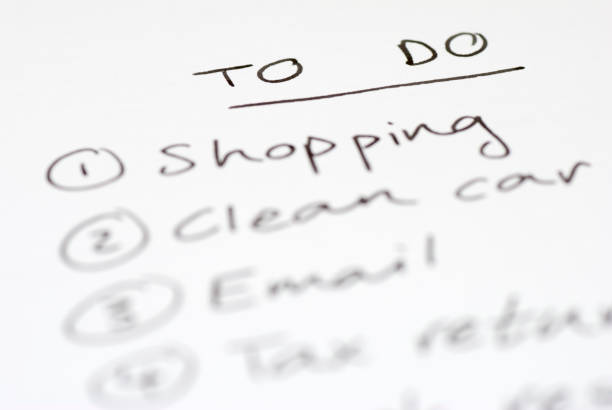
So tomorrow morning, don’t reach for that giant to-do list. Just reach for a single piece of paper or a note in your phone. Ask yourself what the one big thing is. Write it down. Pick a time on your calendar. Do it. Then let yourself enjoy the weird calm of having handled the most important thing. That calm is the whole point. And it gets stronger every day you build this routine. You can do this. One big thing at a time.
Related Articles
Learn more about Tools for When You Feel Anxious.

How to Take a Huge Task and Make It Feel Tiny