Loading...
Skip to Content

How Washing Dishes Can Quiet Your Racing Thoughts

Let’s be real. Your brain never shuts up. You’re trying to relax, and suddenly you’re worrying about that thing you said three years ago or planning what to eat for dinner tomorrow. It’s exhausting. But here’s a weird trick that actually works: wash your dishes like it’s the most important thing in the world. I’m serious.

Think about the last time you did the dishes. Probably you were zoned out, thinking about work, school, or that awkward conversation from earlier. Your hands were moving, but your mind was somewhere else. That’s normal, but it’s also a waste of a good chance to calm down.

When you pay close attention to a boring everyday task, something cool happens. Your brain stops spinning. It has to focus on what your hands are doing right now. And “right now” is the only place anxiety can’t live. Anxiety is all about “what if” and “back then.” The present moment? It doesn’t have room for that stuff.

So here’s how to turn dishwashing into a mental reset. Next time you’re at the sink, stop rushing. Don’t think about finishing fast. Think about each step. Turn on the water and notice how it sounds. Is it a steady stream or a sputter? Feel the temperature on your hands. Too hot? Too cold? Just notice it. No need to change it.

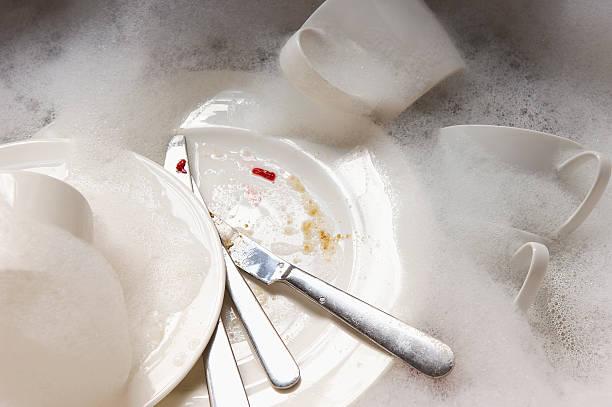
Pick up a plate. Look at it. Really look. Maybe there’s a tiny crack you never saw before. Maybe there’s some stuck-on food. Feel the texture of the sponge. Squeeze it. Hear the squish. Now add soap. Watch the bubbles form. They’re weirdly satisfying, right? Run the sponge over the plate. Feel the pressure. Hear the scrub-scrub-scrub. Rinse it. Watch the water slide off. Set it in the rack. Hear the clink.

Do that for every single dish. Your mind will try to wander. It will want to go back to that worry or that plan. That’s okay. Just gently pull it back to the dish. You don’t have to yell at yourself for getting distracted. Just say “okay, back to the plate.” That’s it.

I used to hate doing dishes. It felt like a chore that ate up my time. Then I tried this. Now it’s one of the few times in my day where I’m not thinking about anything else. Ten minutes of just soap and water. When I finish, my shoulders are lower. My breathing is slower. And the worries? They’re still there, but they feel smaller. Like they’ve been put on hold.

Why does this work? Because your brain has a limit. It can only pay full attention to one thing at a time. Right now, that thing is the feeling of a wet glass in your hand. That means it can’t also be replaying that argument you had this morning. The anxiety loses its spotlight. The brain gets a break.

You don’t have to believe me. Just try it for three minutes. Set a timer if you want. Wash one cup with total attention. Feel the handle, the rim, the bottom. Notice the water running over your fingers. See the light through the glass. If your mind drifts, bring it back. At the end of three minutes, check in with yourself. You might be surprised.

This works with any simple task. Folding laundry, sweeping the floor, even brushing your teeth. The key is to do it slowly and with your whole attention. Don’t multitask. Don’t listen to a podcast. Just do the task. Let it be the only thing that exists.

The next time your brain is racing and you feel stuck, walk to the sink. Grab a dirty dish. And give yourself permission to be nowhere else but there. No goals. No fixing. Just the warm water, the bubbles, and the quiet.

Related Articles

Learn more about Staying in the Present Moment.

The Elusive Now: Unpacking the True Meaning of “Staying in the Present Moment”

The directive to “stay in the present moment” has become a ubiquitous piece of modern advice, echoing from mindfulness apps to self-help books.
Learn More

The Art of Anchoring Yourself: Finding Presence Amidst Overwhelm

The feeling of overwhelm is a modern epidemic, a storm of mental noise that pulls us out of the moment.
Learn More

Quick Tips

What are some everyday tasks I can practice paying attention to?

You can use almost anything you do automatically! Try focusing while you wash dishes. Feel the warm water on your hands and the texture of the bubbles. Or, when you drink tea or coffee, really notice the warmth of the cup and the drink’s taste. Walking is another great one—pay attention to the feeling of your feet touching the ground. Even brushing your teeth works. The goal is to pick a normal activity and do it with your full attention, instead of while thinking about other worries.

What should I do when my mind wanders off during a task?

Don’t get mad at yourself! It’s completely normal and expected for your mind to wander. That’s just what minds do. The most important part of this practice is to notice when it has happened. When you realize you’re thinking about something else, just gently and kindly guide your attention back to the task. There’s no need to restart. Every time you gently bring your focus back, you are strengthening your ability to manage your anxiety. It’s like a friendly game of fetch with your brain.

Can this really make a big difference in how I feel?

Yes, absolutely. It might seem too simple, but that’s its power. You are training your brain to be right here, right now, instead of worrying about the future or the past. Doing this for just a few minutes each day builds up your “focus muscle.“ You’ll start to find that you can call upon this calm feeling during more stressful parts of your day. It’s a small, manageable tool that, with practice, can help you feel more steady and peaceful in your daily life.

Why does slowing down and paying attention help me feel less anxious?

When you rush, your mind is everywhere at once, which can feel chaotic and overwhelming. By slowing down and focusing on one simple task, you give your brain a quiet break. It’s like giving a spinning top a place to rest. You’re not trying to stop your thoughts, but you’re gently guiding them to one safe, simple thing. This makes the “noise” in your head get quieter, and your body naturally starts to relax because it feels grounded in what you’re doing right now.

How is this different from just distracting myself from anxiety?

This is a key difference. Distraction is when you try to run away from your anxious feelings by watching TV or scrolling on your phone. Paying close attention is the opposite. You are staying present with your experience, without judgment. You are not running from the anxiety; you are building a skill of calm focus that can exist alongside it. Over time, this makes you feel more in control and resilient, rather than just temporarily taking your mind off the problem.