Why Washing Dishes by Hand Is a Secret Way to Feel Better
Here’s a trick that works better than you’d think: go wash some dishes. Not with a dishwasher. By hand. And don’t rush it. Do it like it’s the only thing that matters right now.
Here’s why this works. Your brain has a hard time being in two places at once. When you really focus on what your hands are feeling and what your eyes are seeing, your brain has to let go of all that future worry and past regret. It’s not magic. It’s just how your mind works. The same part of your brain that plays out scary future scenes can’t also pay full attention to the soap bubbles popping in the sink.
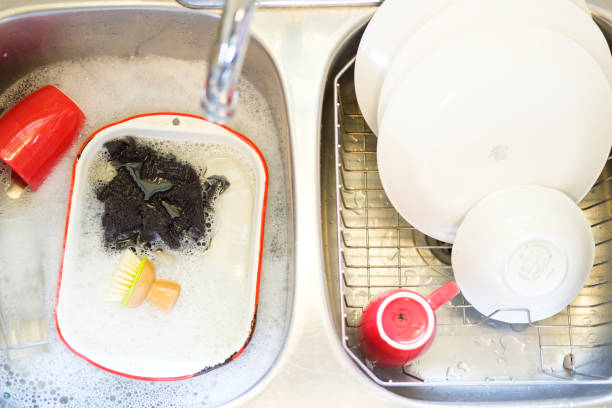
So let’s start. You turn on the water. Warm, not too hot. You feel it hit your fingers. That’s a real sensation. Your brain can register that. You squeeze the soap. You notice that sweet, clean smell. That’s another real thing. Then you pick up a fork. You feel the metal tines. You run the sponge over each one. You see the bits of food lift off and slide away. You hold the fork under the water and watch it become shiny and clean.
All of that is happening right now. Not tomorrow. Not last week. Right now, in your kitchen, with water running over your hands.
The cool part is, you don’t have to think about any of this in a complicated way. You don’t need special words or fancy rituals. You just need to actually pay attention to what you’re doing. That’s it. When your mind wanders off to that meeting next Tuesday, you gently bring it back to the plate in your hand. You feel the slickness of the soap. You hear the clink of the plate against the side of the sink. You look at the pattern on the cup you’re scrubbing. That’s all.
You’re training your brain to focus on the real world instead of the imaginary one where everything goes wrong. Every time you catch yourself drifting and pull your attention back to a wet sponge, you’re building a little muscle. That muscle gets stronger, and the next time you feel anxious about something, you can tap into it. You can say to yourself, “Okay, right now, I’m just going to wash this bowl.“ And then you wash the bowl. That’s a win.
It doesn’t have to be dishes either. You can do the same thing with folding laundry. Feel the warmth of the towels from the dryer. Match up the socks. Smooth out the wrinkles. Or brushing your teeth. Notice the minty taste. Feel the bristles against your gums. Watch yourself in the mirror. Or sweeping the floor. Listen to the scratch of the bristles. Watch the dust pile up. Any everyday task becomes a little anchor that keeps you from floating away into worry.
The best part is that you’re still getting the dishes done. You’re not wasting time. You’re just doing it differently. And when you finish, you look at the clean, stacked plates and you feel a small, solid sense of accomplishment. That’s real. You did something. You made a tiny bit of order in a messy world. And for those few minutes, your mind had a break from the constant what-ifs.
Try it tonight. After dinner, when you’re tempted to rush through the cleanup so you can go sit and stare at your phone, slow down instead. Keep the water running a little longer. Take each dish one at a time. Pretend you’re giving it your full attention, like it’s the most interesting thing in the world. It might feel silly at first. That’s fine. Keep going. Your brain will catch on.
You don’t need a quiet room or a special cushion. You just need a sink, some soap, and a choice to pay attention to what’s right in front of you. That’s how you step out of the swirl of worries and back into your own life. One plate at a time.
Related Articles
Learn more about Staying in the Present Moment.

Watch Your Thoughts Like Clouds Drift By